Introduction
Choose Best Loan:
Borrowing money can be a useful financial tool when it is planned carefully. Whether you are buying a car, paying for education, renovating your home, handling an unexpected expense, or starting a business, the right loan can provide access to funds without requiring you to save the entire amount first.
However, choosing a loan is not simply about finding the lender offering the lowest interest rate. A loan can affect your monthly budget for months or even years, so understanding the repayment period, fees, interest rate, loan conditions, and total cost is essential.
You can also explore our Trends category to learn more about important changes affecting financial markets and the economy.
Choose Best Loan Many borrowers focus only on the monthly payment. A lower monthly payment may look attractive, but it can sometimes result in a longer repayment period and a higher total cost. On the other hand, a shorter loan term may reduce the total interest but require larger monthly payments.
The right loan depends on your financial goals, income, existing obligations, credit profile, and ability to repay. This guide explains how different loans work, what you should consider before borrowing, the advantages and disadvantages of loans, common mistakes to avoid, and practical questions to ask before signing a loan agreement.
What Is a Loan?
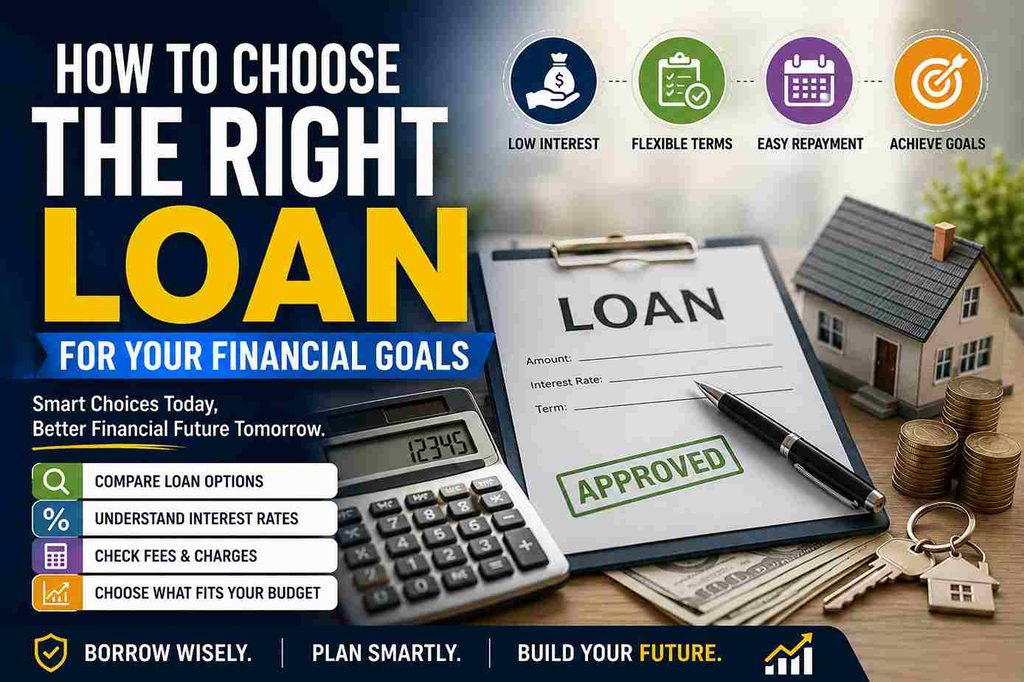
Choose Best Loan,A loan is money provided by a lender to a borrower under an agreement that requires the money to be repaid according to specific terms.
Choose Best Loan,The amount borrowed is generally called the principal. The lender may charge interest for providing the money. Depending on the loan, additional fees may also apply.
For additional information about comparing loans and understanding borrowing costs, visit the Consumer Financial Protection Bureau.
A typical loan agreement may include:
- Loan amount
- Interest rate
- Annual percentage rate (APR), where applicable
- Repayment period
- Monthly payment
- Processing or origination fees
- Late-payment charges
- Early repayment conditions
- Collateral requirements
Before accepting a loan, borrowers should understand all of these terms rather than focusing on only one number.
Why Choosing the Right Loan Matters
Choose Best Loan Not every loan is suitable for every financial situation.
For example, using a long-term loan to pay for a short-term expense may increase the total cost unnecessarily. Similarly, using a high-interest credit product for a large purchase could create significant interest expenses.
Choose Best Loan Choosing the right loan can help you:
- Keep monthly payments manageable
- Reduce unnecessary interest costs
- Avoid unsuitable repayment periods
- Match borrowing with your financial goal
- Reduce the risk of excessive debt
- Plan your budget more effectively
The goal should not simply be to obtain money. The goal should be to obtain financing that you can realistically repay.

Common Types of Loans
1. Personal Loans
Personal loans are commonly used for expenses that do not fall into a specific financing category.
Choose Best Loan Depending on the lender, borrowers may use personal loans for:
- Home improvements
- Emergency expenses
- Large purchases
- Debt consolidation
- Education expenses
- Family-related expenses
Personal loans may be secured or unsecured, depending on the lender and the borrower’s circumstances.
2. Auto Loans
Auto loans are designed specifically for vehicle purchases.
Choose Best Loan The vehicle often serves as collateral for the loan. This means the lender may have rights over the vehicle if the borrower fails to meet the repayment terms.
When comparing auto loans, consider:
- Interest rate
- Loan duration
- Down payment
- Total repayment amount
- Vehicle value
- Insurance requirements
- Additional fees
A longer repayment period may reduce the monthly payment but can increase the overall interest paid.

3. Mortgage Loans
Mortgage loans are generally used to purchase property.
Because homes can be expensive, mortgages often involve large loan amounts and long repayment periods.
Choose Best Loan Borrowers should consider more than the mortgage payment itself. Homeownership may also involve:
- Property taxes
- Insurance
- Maintenance
- Repairs
- Closing costs
- Utilities
- Other property-related expenses
Before taking a mortgage, it is important to determine whether the total cost fits comfortably within your long-term budget.
4. Student Loans
Student loans can help cover education-related costs.
Choose Best Loan Depending on the country and lender, student loans may have different interest rates, repayment rules, deferment options, and eligibility requirements.
Students should consider the expected cost of education and potential future income before taking on significant education debt.
Borrowing for education can be valuable when it supports realistic career opportunities, but students should understand how much they will ultimately need to repay.
5. Business Loans
Business loans provide financing for companies and entrepreneurs.
Businesses may use financing for:
- Equipment
- Inventory
- Expansion
- Marketing
- Working capital
- Technology
- Commercial property
Before taking business debt, owners should estimate expected revenue, operating costs, cash flow, and repayment requirements.
Choose Best Loan A loan should support a realistic business plan rather than simply cover ongoing losses without a clear path toward sustainability.
Secured vs. Unsecured Loans
One of the most important differences between loans is whether they are secured or unsecured.
Secured Loans
A secured loan is backed by an asset or collateral.
Examples may include:
- Mortgages
- Auto loans
- Certain secured personal loans
Because the lender has an asset supporting the loan, secured loans may sometimes offer different pricing or terms compared with unsecured borrowing.
However, the borrower may risk losing the collateral if the loan is not repaid according to the agreement.
Unsecured Loans
Choose Best Loan Unsecured loans generally do not require a specific asset as collateral.
Choose Best Loan Personal loans and some credit products can fall into this category.
Because there is no specific collateral securing the debt, lenders may place greater importance on factors such as credit history, income, and existing debt.
Fixed vs. Variable Interest Rates
Interest rates can significantly affect the total cost of borrowing.
Fixed Interest Rate
A fixed rate generally remains unchanged during the agreed period.
Choose Best Loan The main advantage is predictability. Borrowers can usually estimate their scheduled payments more easily.
Variable Interest Rate
Choose Best Loan A variable rate can change according to the terms of the loan.
This can create uncertainty because payments or interest costs may increase if the applicable rate rises.
Before accepting a variable-rate loan, make sure you understand how and when the rate can change.
How to Compare Different Loans
Choose Best Loan Comparing loans is one of the most important steps before borrowing.
Do not compare products based solely on the advertised interest rate.
Choose Best Loan Instead, consider the complete cost.
Interest Rate
Choose Best Loan The interest rate determines how much interest may accumulate on the borrowed amount.
APR
Where applicable, APR can provide a broader view of borrowing costs because it may incorporate certain fees and charges.
Loan Term
Choose Best Loan The loan term determines how long you will make payments.
Monthly Payment
A monthly payment should fit comfortably into your budget.
Total Cost
Always determine how much you will repay over the full term.
Fees
Check for:
- Application fees
- Origination fees
- Processing charges
- Late fees
- Early repayment fees
- Other administrative charges
The cheapest-looking loan is not necessarily the cheapest loan overall.
How Your Credit Can Affect Borrowing
Choose Best Loan Credit history can play an important role in lending decisions.
Depending on the country and lender, your credit profile may influence:
- Approval decisions
- Interest rates
- Loan limits
- Repayment conditions
A strong credit history can potentially improve access to competitive borrowing terms.
Choose Best Loan Responsible credit behavior generally includes making payments on time, keeping borrowing manageable, and regularly reviewing credit information where credit reporting is available.
However, credit requirements vary among lenders and financial products.
How Much Should You Borrow?
One of the biggest mistakes borrowers make is asking:
“How much can I borrow?”
A better question is:
“How much can I comfortably repay?”
Choose Best Loan A lender may approve a certain amount based on its assessment of your financial situation. That does not necessarily mean borrowing the maximum amount is a good idea.
Before applying, calculate:
- Monthly income
- Essential expenses
- Existing debt payments
- Savings contributions
- Emergency expenses
- Proposed loan payment
Leave room in your budget for unexpected costs.
Understanding the Total Cost of a Loan
Consider a simple example.
Imagine you borrow $10,000.
Choose Best Loan The monthly payment may appear affordable, but the total amount repaid can be significantly higher than $10,000 after interest and fees.
This is why borrowers should always ask:
How much money will I repay in total?
Choose Best Loan The total cost can be more useful than the monthly payment when comparing different loan terms.
A longer repayment period may make monthly payments smaller while increasing the amount of interest paid over time.
Pros of Taking a Loan
Access to Money
Loans allow borrowers to access funds without waiting until they have saved the entire amount.
Financing Major Purchases
Loans can help finance expensive purchases such as homes, vehicles, or education.
Potential Credit-Building Benefits
Where credit reporting applies, responsible repayment can contribute to a positive credit history.
Business Opportunities
Business financing can help companies purchase equipment, expand operations, or manage working capital.
Flexible Options
There are many different types of loans designed for different purposes.
Cons of Taking a Loan
Interest Costs
Borrowing usually costs more than the original amount because of interest and potentially other charges.
Monthly Obligations
A loan creates a recurring financial commitment.
Risk of Over-Borrowing
Borrowing more than necessary can create unnecessary financial pressure.
Potential Credit Damage
Late or missed payments can negatively affect credit history where such payments are reported.
Collateral Risk
With secured loans, failure to repay can put the pledged asset at risk.
Reduced Financial Flexibility
Large debt payments can leave less money available for savings, emergencies, and other goals.
When Should You Avoid Taking a Loan?
Choose Best Loan Borrowing may not be appropriate when the repayment would seriously strain your budget.
You should carefully reconsider borrowing if:
- You cannot afford the monthly payment
- You already have significant debt
- You have no emergency savings
- You are borrowing for unnecessary spending
- You are using new debt to repeatedly cover old debt
- You do not understand the loan terms
- The total cost is significantly higher than expected
Choose Best Loan,Taking additional debt without addressing the underlying financial problem can make the situation more difficult.
Smart Ways to Manage a Loan
Choose Best Loan Once you take a loan, responsible management becomes important.
Make Payments on Time
Choose Best Loan Late payments can lead to additional charges and may affect your credit history.
Track Your Remaining Balance
Regularly checking your loan balance can help you understand your progress.
Avoid Unnecessary New Debt
Taking additional loans while already managing significant debt can increase financial pressure.
Keep an Emergency Fund
An emergency fund can help you handle unexpected expenses without immediately relying on additional borrowing.
Review Your Loan Periodically
If your financial situation changes, review whether your current loan remains appropriate.
Should You Pay Off a Loan Early?
Choose Best Loan Paying a loan early can potentially reduce future interest costs, but it depends on the loan terms.
Before making an early repayment, check whether the lender charges an early repayment or prepayment fee.
Choose Best Loan Also consider whether using your available savings to pay the loan would leave you without enough money for emergencies.
Sometimes maintaining an emergency fund is more important than paying down a relatively low-cost debt immediately.
Choose Best Loan The best decision depends on the loan terms and your overall financial situation.
Common Loan Mistakes to Avoid
Choosing Only Based on Monthly Payment
A small monthly payment can hide a long repayment period and higher total costs.
Accepting the First Offer
Comparing multiple lenders can help you understand available options.
Ignoring Fees
Fees can significantly affect the overall cost.
Borrowing the Maximum Amount
Choose Best Loan Approval for a large loan does not mean you need to borrow the full amount.
Not Reading the Agreement
Always understand the repayment conditions before signing.
Ignoring Variable Rates
If the rate can change, understand how those changes could affect your payments.
Taking Debt for Lifestyle Spending
Borrowing for unnecessary purchases can create long-term financial pressure.
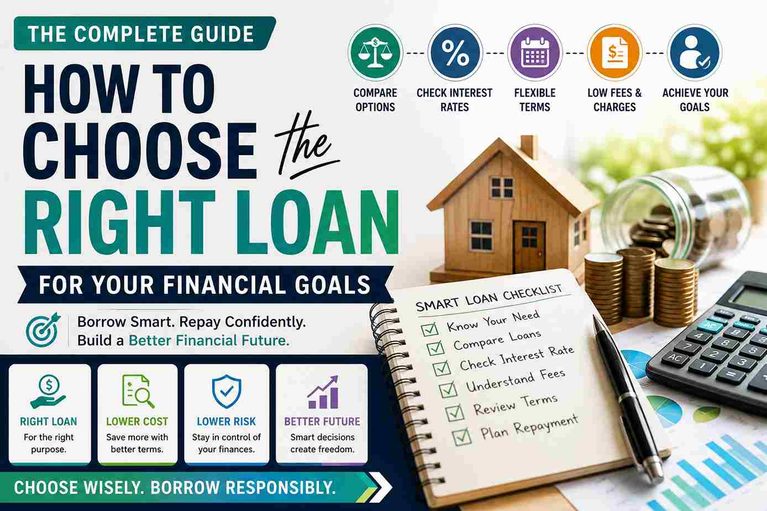
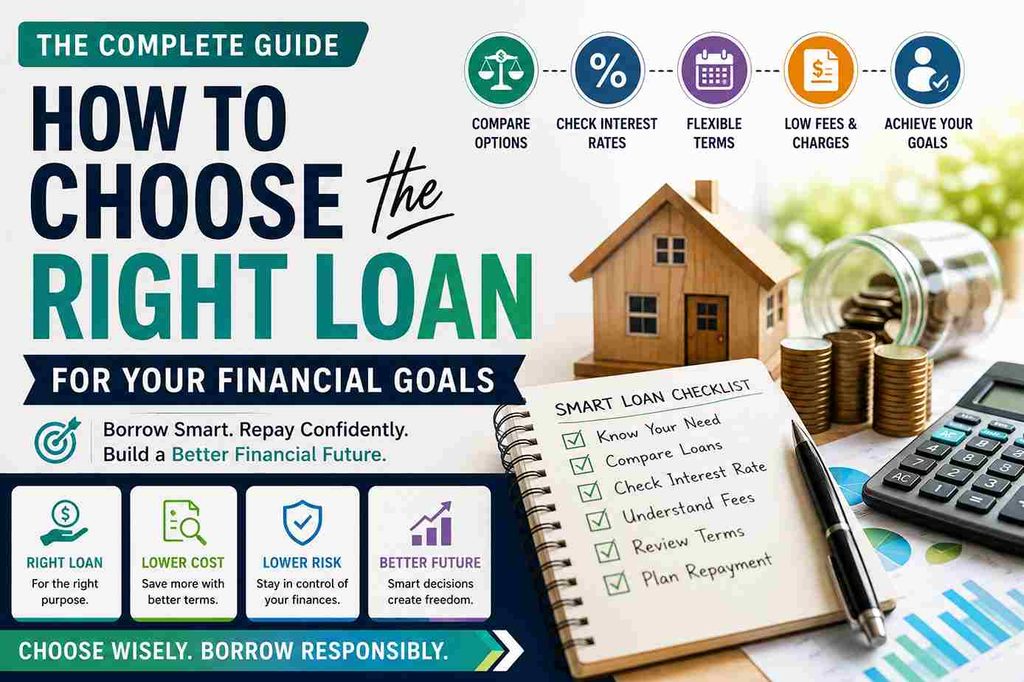
A Simple Loan-Selection Checklist
Before accepting a loan, ask yourself these questions:
1. Why am I borrowing?
Have a clear purpose.
2. How much do I actually need?
Avoid borrowing more than necessary.
3. What is the total cost?
Look beyond the monthly payment.
4. Can I comfortably afford the payment?
Check your budget.
5. Is the interest rate fixed or variable?
Understand how the rate works.
6. Are there additional fees?
Read the complete pricing information.
7. What happens if I miss a payment?
Understand late-payment consequences.
8. Can I repay early?
Check the lender’s prepayment conditions.
9. Is collateral required?
Understand what assets could be at risk.
10. Have I compared alternatives?
Consider other lenders or financing options.
The Relationship Between Loans and Financial Goals
A loan should fit into your broader financial plan.
For example, if your goal is to purchase a home, you need to consider the mortgage alongside savings, insurance, property costs, and long-term expenses.
If your goal is starting a business, consider how loan repayments will affect cash flow.
If your goal is education, consider the potential cost of repayment after graduation.
Thinking about the loan within the context of your entire financial plan can help you avoid decisions that look affordable today but become difficult later.
How Economic Conditions Can Affect Loans
Economic conditions can influence borrowing costs.
Interest rates, inflation, employment conditions, and financial-market conditions can all affect lending environments.
For example, changes in interest rates can influence the cost of certain types of borrowing.
This is why borrowers should consider the broader financial environment rather than evaluating a loan in isolation.
However, economic conditions can change, so nobody can guarantee exactly what borrowing costs will look like in the future.
Credit Cards vs. Personal Loans
Credit cards and personal loans are different forms of borrowing.
A personal loan generally provides a specific amount that is repaid over a defined period.
A credit card generally provides revolving credit that can be reused as balances are repaid.
Credit cards can be convenient for everyday spending, but carrying a balance can become expensive depending on the interest rate and terms.
Personal loans may provide more predictable repayment schedules, but suitability depends on the purpose of borrowing and the specific loan terms.
Is Debt Always Bad?
Debt is not automatically bad.
Borrowing can be useful when it helps someone achieve a meaningful financial goal and the repayment is manageable.
For example, a mortgage may help a household purchase a home, while business financing may help a company invest in productive assets.
The problem generally arises when debt becomes excessive, expensive, or difficult to manage.
The key question is not simply:
“Do I have debt?”
It is:
“Is my debt manageable and helping me achieve a reasonable financial goal?”
Frequently Asked Questions
What is the best type of loan?
There is no single best loan for everyone. The appropriate loan depends on the purpose, amount needed, repayment ability, interest rate, fees, and loan terms.
Should I choose a short-term or long-term loan?
A short-term loan may result in higher monthly payments but can reduce the total interest paid. A longer loan may have lower monthly payments but potentially higher total borrowing costs.
Is the lowest interest rate always the best option?
Not necessarily. Fees, loan duration, APR, repayment conditions, and other costs should also be considered.
How much of my income should go toward debt?
There is no universal percentage that works for everyone. Your debt payments should leave enough room for essential expenses, savings, emergencies, and other financial obligations.
Can taking a loan improve my credit?
Responsible repayment may help build or maintain a positive credit history where credit reporting applies. However, taking debt solely to improve credit may not be necessary.
What happens if I miss a loan payment?
Depending on the lender and agreement, you may face late fees, additional interest, collection activity, or negative credit reporting.
Is it better to pay off debt or save money?
The answer depends on factors such as the interest rate, emergency savings, and your financial goals. Maintaining an emergency fund can be important even while paying debt.
Should I borrow money to invest?
Borrowing to invest can significantly increase financial risk because investment returns are uncertain while loan repayments are generally required. Anyone considering this approach should understand the risks carefully.
Can I have multiple loans?
It may be possible, but multiple loans increase your overall financial obligations. Make sure you can comfortably manage all required payments.
What should I check before signing a loan agreement?
Review the interest rate, APR where applicable, fees, repayment schedule, total cost, late-payment terms, collateral requirements, and early repayment conditions.
How can I reduce borrowing costs?
Comparing lenders, improving your credit profile where applicable, choosing an appropriate loan term, borrowing only what you need, and understanding fees can help you evaluate borrowing costs more effectively.
Should I use a loan to pay another loan?
Debt consolidation or refinancing can sometimes make sense, but it should be evaluated carefully. A new loan does not eliminate the underlying debt; it changes how that debt is structured.
Final Thoughts
Choosing the right loan is an important financial decision. The best borrowing option is not necessarily the one with the lowest advertised rate or the smallest monthly payment. Instead, it should be a loan that matches your purpose, budget, repayment ability, and long-term financial goals.
Before borrowing, compare different options, understand the total cost, read the agreement carefully, and consider what could happen if your financial circumstances change.
Remember that a loan is not simply extra money. It is a financial commitment that must eventually be repaid.
By borrowing responsibly and understanding the terms before signing, you can use credit as a financial tool rather than allowing debt to control your financial decisions.
At My Finance Nests, our goal is to make personal finance easier to understand. Whether you are learning about credit, loans, investing, financial news, or broader financial trends, developing good financial knowledge can help you make more informed decisions.
Borrow with a purpose, compare your options, understand the cost, and always plan for repayment.
Table of Contents