
Introduction
Emergency Fund vs Investing Unexpected expenses can change your financial situation in a matter of days. A sudden medical bill, car repair, job loss, home emergency, or urgent family expense can force you to use a credit card or take a loan when you are not financially prepared.
This is why an emergency fund is one of the most important parts of a strong personal finance strategy.
Emergency Fund vs Investing money kept specifically for unexpected and necessary expenses. It is not designed for vacations, shopping, entertainment, or investments. Instead, it acts as a financial safety net that gives you time and flexibility when something goes wrong.
In 2026, building an Emergency Fund vs Investing is especially important because household expenses can change quickly. Rent, food, transportation, insurance, healthcare, and other everyday costs can put pressure on a monthly budget.
The good news is that you do not need a huge salary to start. You can begin with a small amount, build the habit, and gradually increase your savings.
In this guide, we will explain what an Emergency Fund vs Investing is, how much you should save, where to keep it, how to build one from zero, its pros and cons, common mistakes, and practical strategies for reaching your financial safety goal.
What Is an Emergency Fund vs Investing?
An Emergency Fund vs Investing is a separate amount of money reserved for genuine financial emergencies.
For example, imagine you suddenly lose your job. Your normal income stops, but your rent, groceries, utilities, transportation, and other essential bills continue.
Without savings, you may have to borrow money immediately.
https://myfinancenests.com/how-to-start-investing-in-the-stock-market-with-little-money/?utm_source=chatgpt.com
With an Emergency Fund vs Investing, you have a financial cushion that can help you cover essential expenses while you recover.
Examples of emergencies include:
- Unexpected medical expenses
- Major car repairs
- Essential home repairs
- Sudden job loss
- Emergency travel
- Necessary appliance replacement
- Unexpected family expenses
- Temporary loss of income
The purpose is simple:
Your emergency fund should protect you from turning an unexpected expense into long-term debt.
Why Is an Emergency Fund Important?
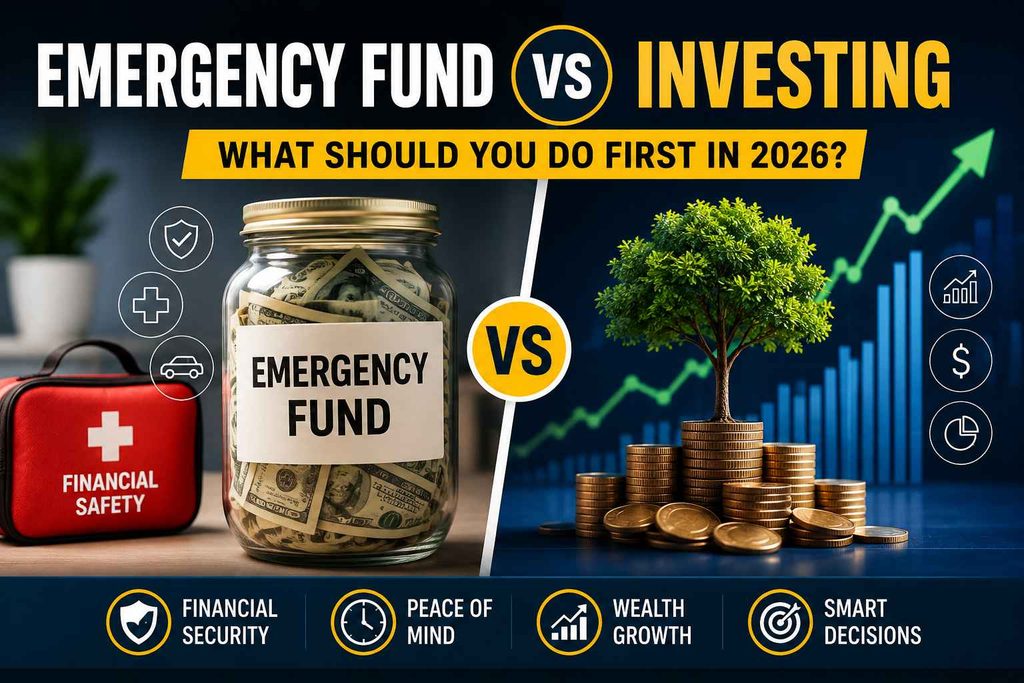
Many people focus on investing because they want their money to grow. Investing can certainly play an important role in long-term wealth building, but investments are not always suitable for short-term emergencies.
Markets can rise and fall.
If you need money during a market downturn, you may be forced to sell an investment at an unfavorable time.
An Emergency Fund vs Investing provides liquidity.
1. It Reduces Financial Stress
Knowing that you have money available for unexpected expenses can make financial problems easier to manage.
Instead of immediately asking:
“How am I going to pay this bill?”
you can focus on solving the actual problem.
2. It Can Reduce Dependence on Debt
Without Emergency Fund vs Investing, people often rely on:
- Credit cards
- Personal loans
- Borrowing from family
- Payday loans
- Other expensive forms of credit
An Emergency Fund vs Investing can reduce the need for these options.
3. It Gives You More Financial Flexibility
An Emergency Fund vs Investing gives you time.
If you lose your job, for example, you may have several weeks or months to search for another opportunity instead of accepting the first available job simply because your bills are due.
4. It Protects Long-Term Investments
Suppose you have invested money for retirement or another long-term goal.
If an emergency occurs and you have no cash savings, you may need to sell those investments.
An Emergency Fund vs Investing can help separate your short-term financial needs from your long-term investments.
How Much Should You Keep in an Emergency Fund?
There is no single amount that works for everyone.
A common target is three to six months of essential living expenses.
However, your ideal amount depends on your personal circumstances.
For example, someone with a stable government job and low monthly expenses may need a different Emergency Fund vs Investing from a freelancer whose income changes every month.
Start with a Small Target
If saving several months of expenses sounds impossible, do not let the large target discourage you.
Emergency Fund vs Investing Start with a smaller milestone.
For example:
First goal: $500
Second goal: $1,000
Third goal: One month of essential expenses
Long-term goal: Three to six months of essential expenses
The exact currency does not matter. The principle is the same.
Your first objective should be to create a financial buffer.
How to Calculate Your Emergency Fund
The easiest way is to calculate your essential monthly expenses.
Do not include every expense you normally make.
Focus on things you genuinely need.
Essential expenses may include:
- Rent or mortgage
- Basic groceries
- Utilities
- Transportation
- Insurance
- Minimum debt payments
- Essential healthcare
- Necessary communication expenses
Suppose your essential monthly expenses are:
| Expense | Monthly Cost |
|---|---|
| Housing | $900 |
| Food | $400 |
| Utilities | $200 |
| Transportation | $200 |
| Insurance | $150 |
| Other essentials | $150 |
| Total | $2,000 |
If you want three months of Emergency Fund vs Investing:
$2,000 × 3 = $6,000
For six months:
$2,000 × 6 = $12,000
So your long-term Emergency Fund vs Investing target could be between $6,000 and $12,000.
The numbers will obviously be different for every household.
Emergency Fund vs Savings Account
An Emergency Fund vs Investing is not necessarily a special type of bank account.
It is primarily a purpose for your money.
You can keep your Emergency Fund vs Investing in an appropriate savings account that is:
- Easily accessible
- Separate from daily spending
- Relatively safe
- Suitable for short-term savings
- Ideally earning some interest
The most important thing is that you can access the money when a genuine emergency Emergency Fund vs Investing.
You should not put your entire Emergency Fund vs Investing into highly volatile investments simply because you want a higher potential return.
https://www.investor.gov/introduction-investing/getting-started/asset-allocation?utm_source=chatgpt.com
Where Should You Keep Your Emergency Fund?
The location of your eEmergency Fund vs Investing matters almost as much as the amount.
1. High-Yield Savings Account
For people who have access to one, a high-yield savings account can be an attractive option.
The advantage is that your Emergency Fund vs Investing money can remain relatively accessible while potentially earning more interest than a traditional low-interest savings account.
However, rates can change, so you should not Emergency Fund vs Investing assume that today’s rate will remain the same forever.
2. Regular Savings Account
A traditional savings account is another option.
Emergency Fund vs Investing,It may offer less interest, but simplicity and accessibility can be valuable.
3. Money Market Account
Depending on your country and financial institution, a money market account may provide another option for keeping emergency savings accessible while potentially earning interest.
Always understand the account’s rules, fees, withdrawal limitations, and protections before choosing one.
4. Avoid Keeping Everything in Cash at Home
Keeping a small amount of physical cash for Emergency Fund vs Investing can be practical.
However, storing your entireEmergency Fund vs Investing at home creates risks such as theft, loss, or damage.
Your primary Emergency Fund vs Investing should generally be kept somewhere secure and accessible.
How to Build an Emergency Fund From Zero
Building an Emergency Fund vs Investing can feel difficult when you are starting from nothing.
The solution is to make the process smaller and more consistent.
Step 1: Set a Specific Target
Do not simply say:
“I need to save more.”
Instead, choose a number.
For example:
My first emergency fund goal is $1,000.
A specific target gives your saving a clear purpose.
Step 2: Review Your Monthly Spending
Look through your recent expenses.
Separate them into three groups:
Needs
Things you must pay for.
Wants
Things that improve your lifestyle but are not essential.
Unnecessary spending
Expenses that provide little value.
You do not need to eliminate everything enjoyable.
Instead, identify a few areas where you can consistently reduce spending.
Step 3: Automate Your Savings
Automation can make saving easier.
For example, if you receive your salary every month, arrange for a fixed amount to move into your savings account shortly after payday.
Even a small automatic transfer can build a powerful habit.
You might start with:
- $10 per week
- $25 per week
- $50 per month
- $100 per month
The amount matters less than consistency when you are beginning.
Step 4: Use Extra Income Wisely
If you receive unexpected money, consider putting part of it toward your emergency fund.
Examples include:
- Freelance income
- Bonuses
- Gifts
- Tax refunds
- Selling unused items
- Side-business income
- Overtime income
You do not necessarily have to save 100% of extra income.
A practical strategy is to divide it between saving, spending, and long-term goals.
Step 5: Increase Your Savings Rate Gradually
Suppose you currently save $25 per month.
After a few months, increase it to $40.
Later, perhaps increase it to $60.
Small increases can eventually make a meaningful difference.
This approach is often easier than trying to suddenly save a very large percentage of your income.
A Simple Emergency Fund Strategy
Here is a straightforward three-stage system.
Stage 1: Starter Emergency Fund
Build your first small cash reserve.
Goal: $500–$1,000
This amount can help with smaller unexpected expenses.
Stage 2: One Month of Essential Expenses
Once the starter fund is complete, work toward one full month of essential expenses.
This provides a stronger safety cushion.
Stage 3: Three to Six Months
Finally, build your emergency fund toward three to six months of essential expenses.
People with irregular income, dependents, high fixed expenses, or less predictable employment may consider keeping a larger reserve.

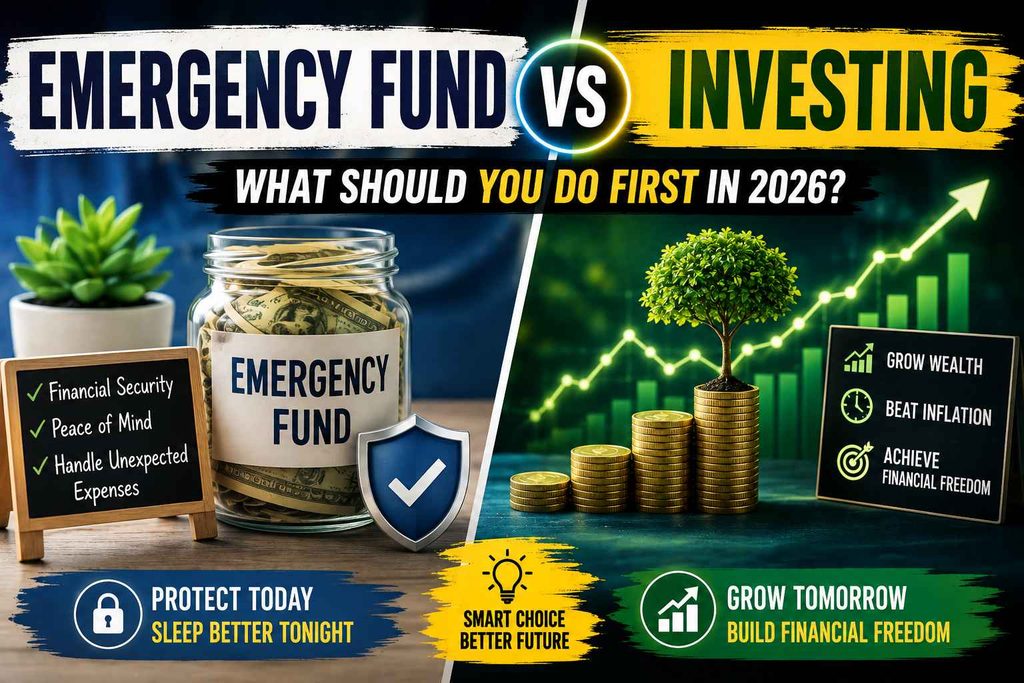
Should You Build an Emergency Fund Before Investing?
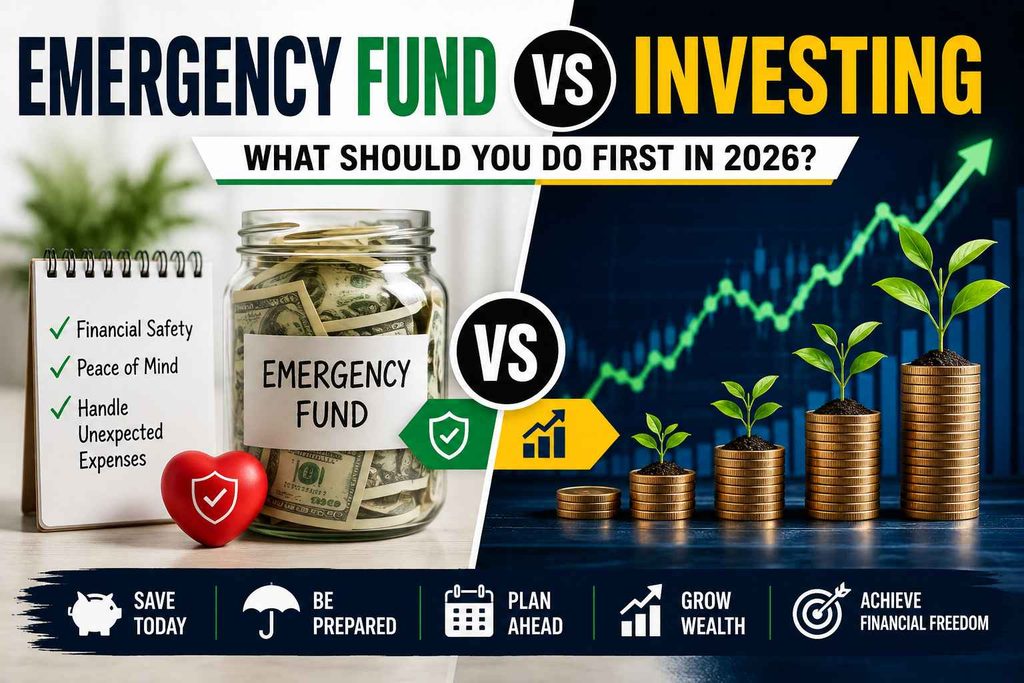
For many people, building at least a basic emergency reserve before aggressively investing is sensible.
Imagine you have $3,000 invested but only $100 in cash savings.
Then an unexpected $1,500 expense occurs.
You may have no choice but to sell investments or borrow money.
A better structure can be:
Emergency savings → High-interest debt management → Long-term investing
The exact order depends on your financial situation.
For example, someone with extremely expensive debt may need to prioritize paying it down while simultaneously maintaining a small emergency buffer.
Emergency Fund and High-Interest Debt
This is an important balance.
Suppose you have credit-card debt with a very high interest rate.
Saving thousands of dollars while paying expensive interest may not always be the most efficient financial strategy.
However, having zero emergency savings can also create problems.
A practical approach may be to establish a small emergency buffer first and then aggressively address expensive debt.
Once the high-interest debt is under control, you can increase your emergency savings toward the larger three-to-six-month target.
Pros and Cons of an Emergency Fund
Pros
Financial Security
The biggest benefit is protection against unexpected expenses.
Less Reliance on Debt
Savings can reduce the need to use credit cards or loans during emergencies.
Reduced Financial Stress
Having cash available can make unexpected situations easier to handle.
Protects Investments
You may avoid selling long-term investments during unfavorable market conditions.
Greater Freedom
An emergency fund can give you more flexibility when dealing with job changes or other major life events.
Cons of Building an Emergency Fund
Emergency savings also have some disadvantages.
1. Lower Potential Returns
Money kept in cash or savings generally has less growth potential than long-term investments.
2. Inflation Risk
If your savings earn less than inflation, your purchasing power may decline over time.
3. Opportunity Cost
Money sitting in an emergency account could potentially have generated higher returns elsewhere.
However, the purpose of emergency savings is security and liquidity, not maximum investment growth.
4. It Requires Discipline
Building several months of expenses takes time.
You may have to delay certain purchases or lifestyle upgrades while building your financial cushion.
Common Emergency Fund Mistakes
Mistake 1: Investing Your Emergency Fund
An emergency fund should generally prioritize safety and accessibility.
Putting the entire fund into volatile assets can create problems if you need the money during a market decline.
Mistake 2: Keeping the Money in Your Checking Account
If emergency savings are mixed with everyday spending money, you may accidentally spend them.
A separate account can create a psychological barrier.
Mistake 3: Setting an Unrealistic Goal
If you decide to save $20,000 immediately despite having limited income, you may become discouraged.
Start with achievable milestones.
Mistake 4: Using the Fund for Non-Emergencies
A vacation, new phone, restaurant bill, or shopping trip usually should not be paid from emergency savings.
Create separate savings goals for planned purchases.
Mistake 5: Forgetting to Rebuild the Fund
Suppose you have $8,000 saved and need $2,000 for a genuine emergency.
Your emergency fund is now $6,000.
Once the situation is resolved, your next financial goal should include rebuilding the $2,000.
How to Know If Something Is a Real Emergency
Before withdrawing money, ask yourself three questions:
Is this unexpected?
Is it necessary?
Does it require immediate payment?
If the answer is yes to all three, using your emergency fund may be reasonable.
For example, a major car repair that you need to get to work may qualify.
A new television because your old one is not the latest model probably does not.
This simple test can prevent unnecessary withdrawals.
What If Your Income Is Irregular?
Freelancers, business owners, contractors, and commission-based workers may need a larger emergency fund.
When income changes from month to month, budgeting becomes more challenging.
Instead of calculating your emergency fund using your best income month, consider using a conservative estimate of your essential expenses.
You may also want to maintain a larger cash buffer because your income itself is less predictable.
How Long Does It Take to Build an Emergency Fund?
It depends entirely on your income, expenses, savings rate, and target.
For example, if your goal is $3,000:
Saving $100 per month takes approximately:
30 months
Saving $250 per month takes:
12 months
Saving $500 per month takes:
6 months
This shows why increasing your savings rate can significantly accelerate progress.
But remember: slow progress is still progress.
A person saving $50 every month is moving in the right direction.
A Better Way to Think About Emergency Savings
Instead of thinking:
“I am losing money by keeping cash.”
think:
“I am buying financial flexibility.”
The purpose of an emergency fund is not to beat the stock market.
Its purpose is to help prevent one unexpected event from destroying your financial plan.
A healthy financial system often has different buckets for different goals:
Emergency savings → short-term goals → long-term investments → retirement
Each serves a different purpose.
Final Thoughts
Building an emergency fund may not be the most exciting part of personal finance, but it can be one of the most valuable.
Investing can help you build wealth. Saving can help you reach short-term goals. But emergency savings provide something different: financial resilience.
You do not need to build a six-month emergency fund overnight.
Start with your first $500 or $1,000. Then work toward one month of essential expenses. Eventually, aim for three to six months, adjusting the target according to your income stability, family responsibilities, debt, and lifestyle.
The most important thing is to make saving automatic and consistent.
An emergency fund will not prevent unexpected problems from happening. What it can do is prevent those problems from becoming long-lasting financial crises.
The goal is not simply to have money saved. The goal is to create enough financial breathing room that an unexpected expense does not force you to abandon your bigger financial plans.
In 2026 and beyond, that financial flexibility can be one of the strongest foundations for building lasting wealth.
Table of Contents