Introduction
Managing money effectively is not always about earning a higher income. In many cases, the bigger challenge is knowing where your money goes after you receive it. You may have a stable salary, regular income, or even multiple sources of income, but without a clear plan, money can disappear surprisingly quickly.
This is where zero-based budgeting can make a major difference.
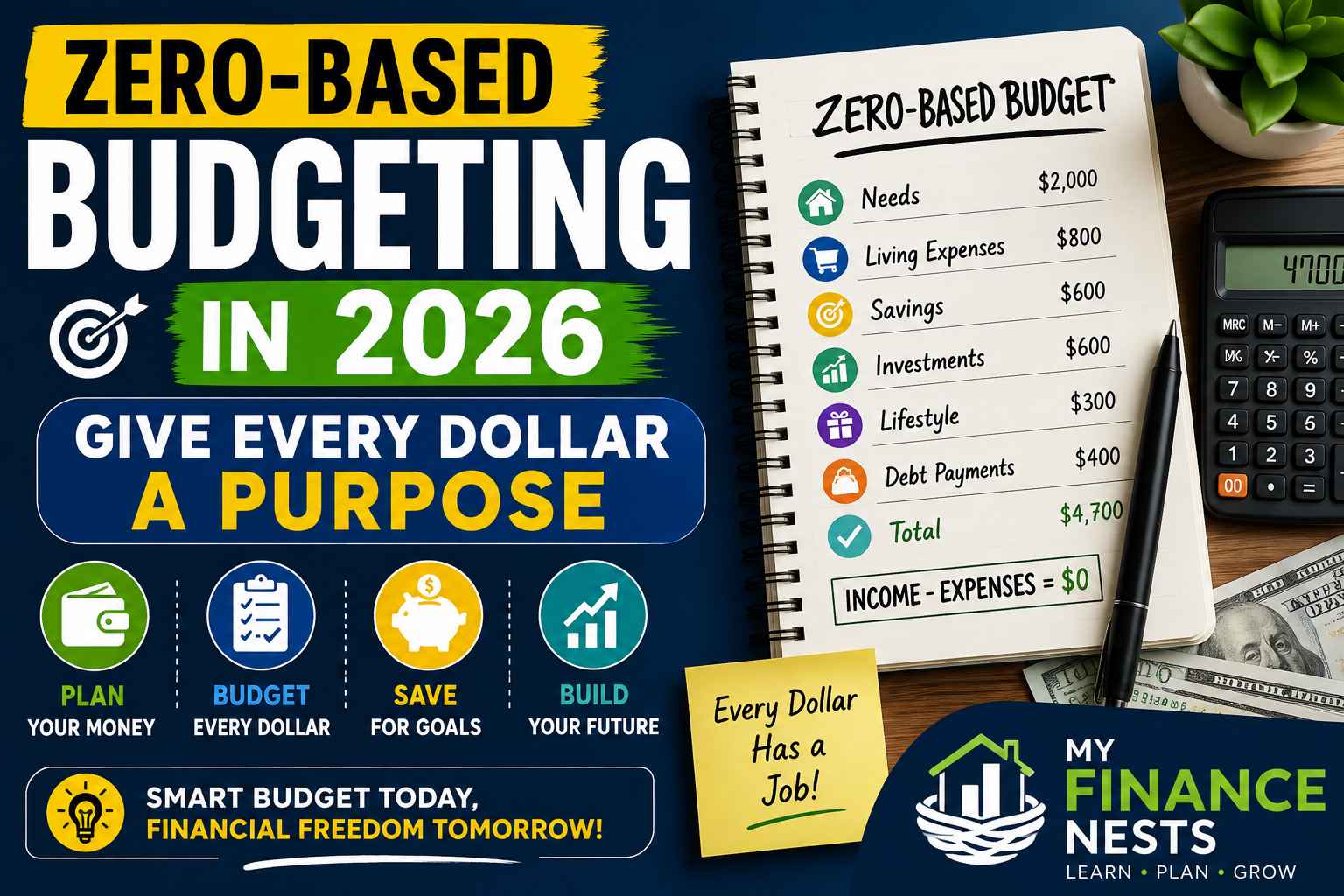
Zero-based budgeting is a budgeting method where you give every dollar of your expected income a specific purpose. The goal is to reach a point where your income minus your planned expenses, savings, investments, and other financial priorities equals zero.
That does not mean you spend every dollar you earn.
Zero-Based Budgeting Instead, it means every dollar is assigned a job.
For example, if you earn $4,000 in a month, you might allocate money toward rent, groceries, transportation, utilities, debt payments, savings, investing, entertainment, and other goals. Once everything has been assigned, the remaining amount should be zero.
vZero-Based Budgeting This approach can help you become more intentional with your money and reduce unnecessary spending.
Zero-Based Budgeting In this guide, we will explain what zero-based budgeting is, how it works, how to create your first zero-based budget, its major advantages and disadvantages, common mistakes, and practical ways to make the system work in 2026.
What Is Zero-Based Budgeting?
Zero-based budgeting is a financial planning method where your monthly income is allocated across different categories until there is no unassigned money left.
The basic formula is:
Income − Expenses − Savings − Investments − Financial Goals = $0
Zero-Based Budgeting The important point is that the final $0 does not mean your bank account should literally contain nothing.
It means your planned income has been completely allocated.
Suppose your monthly income is $5,000.https://myfinancenests.com/how-to-build-an-emergency-fund-in-2026/?utm_source=chatgpt.com
You could create a plan like this:
| Category | Amount |
|---|---|
| Housing | $1,500 |
| Food | $600 |
| Transportation | $400 |
| Utilities | $300 |
| Insurance | $250 |
| Debt Payments | $400 |
| Savings | $500 |
| Investments | $500 |
| Entertainment | $250 |
| Personal Expenses | $200 |
| Miscellaneous | $100 |
| Total | $5,000 |
Every dollar has a purpose.
This is different from simply spending money throughout the month and saving whatever happens to remain at the end.
Why Zero-Based Budgeting Is Different
Many people follow an informal budgeting approach:
“I’ll pay my bills first and save whatever is left.”
The problem is that there may not be much left.
Zero-based budgeting reverses the process.
Instead of asking:
“What can I save after spending?”
you ask:
“How should I allocate my income before I spend it?”
That small change in thinking can make your financial decisions much more intentional.
If you decide in advance that $500 will go toward savings, that amount becomes part of your financial plan rather than an optional activity.

How Zero-Based Budgeting Works
The process is relatively simple.
Step 1: Calculate Your Monthly Income
Start by determining how much money you expect to receive during the month.
For salaried workers, this may be straightforward.
For freelancers, business owners, commission-based workers, or people with irregular income, it can be more difficult.
If your income changes every month, consider using a conservative estimate rather than assuming your highest possible income.
For example, if your monthly income usually ranges between $3,000 and $4,500, you might build your essential budget around a lower realistic figure.
This reduces the risk of committing money you may not actually receive.
Step 2: List Your Fixed Expenses
Fixed expenses are costs that are relatively consistent each month.
Examples include:
- Rent
- Mortgage
- Insurance
- Loan payments
- Internet
- Phone bills
- Subscription services
- School payments
Write down the amount you expect to pay for each category.
Fixed expenses are usually easier to plan because they do not change dramatically from month to month.https://consumer.gov/your-money/making-budget?utm_source=chatgpt.com
Step 3: Estimate Variable Expenses
Variable expenses can change depending on your lifestyle and circumstances.
Examples include:
- Groceries
- Fuel
- Restaurants
- Entertainment
- Clothing
- Personal care
- Shopping
Look at your previous spending to create realistic estimates.
Do not create an unrealistic grocery budget simply because you want to spend less.
A budget should be challenging enough to improve your finances but realistic enough that you can actually follow it.
Step 4: Add Savings
Savings should not always be treated as whatever happens to remain at the end of the month.
With zero-based budgeting, savings become part of the plan.
You might allocate money toward:
- Short-term savings
- Future purchases
- Travel
- Education
- Home improvements
- Retirement
- Other financial goals
The amount depends on your income and priorities.
Even a small planned contribution can be more useful than an inconsistent approach.
Step 5: Include Investments
If investing is part of your financial strategy, it can also receive a specific allocation.
For example, you may decide that a certain amount of your monthly income will go toward long-term investments.
However, investing should be considered alongside other financial priorities.
Someone with significant high-interest debt may have different priorities from someone who has no debt and already has sufficient emergency savings.
The important principle is to make the decision intentionally rather than investing randomly whenever extra money appears.
Step 6: Assign Money to Personal Spending
A zero-based budget does not mean eliminating all fun.
Entertainment and personal spending can still be included.
For example:
- Dining out
- Movies
- Gaming
- Hobbies
- Shopping
- Weekend activities
Giving these categories a specific limit can actually make spending more enjoyable because you know how much you can spend without damaging other financial goals.
Step 7: Give the Remaining Money a Job
After listing all your expenses and goals, calculate what remains.
Suppose your income is:
$4,000
and your planned allocations total:
$3,700
You still have:
$300
Instead of leaving the money unassigned, decide what it should do.
You could allocate it toward:
- Savings
- Debt repayment
- Investments
- A future purchase
- A sinking fund
- Additional spending
Once that $300 has a purpose, your budget reaches zero.
Zero-Based Budgeting Example
Imagine Sarah earns $4,500 per month.
Her budget might look like this:
Needs
- Housing: $1,400
- Groceries: $500
- Utilities: $250
- Transportation: $300
- Insurance: $200
Total needs: $2,650
Financial Goals
- Savings: $400
- Investing: $400
- Debt repayment: $300
Total financial goals: $1,100
Lifestyle
- Dining out: $200
- Entertainment: $150
- Shopping: $150
- Personal care: $100
- Miscellaneous: $150
Total lifestyle: $750
Grand total:
$2,650 + $1,100 + $750 = $4,500
Every dollar has been assigned.
The budget reaches zero without requiring Sarah to spend everything.
Zero-Based Budgeting vs Traditional Budgeting
The main difference is the level of intention.
A traditional budget might tell you:
“You usually spend around $500 on groceries.”
A zero-based budget tells you:
“This month, $500 is specifically allocated for groceries.”
The second approach can create stronger awareness.
It also makes it easier to identify where money is being wasted.
For example, if you consistently allocate $150 for subscriptions but realize you only use two of them, you can cancel unnecessary services and redirect that money toward another goal.

Benefits of Zero-Based Budgeting
1. Greater Control Over Your Money
The biggest advantage is awareness.
You know where your income is supposed to go before you start spending it.
Instead of wondering where your money disappeared, you have a plan for each category.
2. Helps Reduce Unnecessary Spending
When money is assigned to specific categories, random spending becomes easier to identify.
For example, if your entertainment budget is $150 and you have already spent $130, you know that another $100 purchase could affect the rest of your plan.
This creates a natural spending boundary.
3. Makes Financial Goals More Concrete
Saving $500 per month can feel abstract.
But when your budget specifically says:
$500 → Long-Term Savings
you have turned a general intention into an actual financial commitment.
The same principle can apply to investing, debt repayment, travel, education, and other goals.
4. Can Help With Debt Management
A zero-based budget allows you to see exactly how much money is available for debt payments.
Instead of making random extra payments, you can intentionally allocate a specific amount toward debt.
This can make your repayment strategy more organized.
5. Encourages Better Financial Decisions
Budgeting forces you to prioritize.
You may discover that you cannot maximize every goal simultaneously.
For example, you may need to decide between increasing entertainment spending and increasing savings.
That decision becomes much clearer when your entire income has been allocated.
Cons of Zero-Based Budgeting
Zero-based budgeting is powerful, but it is not perfect.
1. It Requires Regular Attention
A zero-based budget works best when you actually review your spending.
If you create a budget once and never check it again, it may quickly become inaccurate.
2. Variable Income Can Make It Difficult
People with irregular income may find monthly budgeting more challenging.
Income can change while expenses remain relatively stable.
A conservative income estimate and flexible categories can help.
3. Unexpected Expenses Can Disrupt the Plan
Even the best budget cannot predict every expense.
A car repair, unexpected travel, medical bill, or other financial event can require adjustments.
This is why a realistic financial plan should include flexibility.
4. It Can Feel Restrictive
Some people dislike detailed budgeting because they feel every purchase is being monitored.
If your budget becomes too restrictive, you may eventually stop using it.
The solution is to create realistic categories that include reasonable personal spending.
5. Over-Planning Can Become Complicated
You do not need dozens of categories.
If your budget contains 40 or 50 tiny categories, maintaining it may become exhausting.
A simpler structure is often easier to follow consistently.
Zero-Based Budgeting for Beginners
If you are completely new to budgeting, do not try to build a perfect system immediately.
Start with the basics.
Create five major groups:
1. Housing
Rent, mortgage, utilities, and home-related expenses.
2. Living Expenses
Food, transportation, personal care, and basic needs.
3. Financial Goals
Savings, investing, and debt payments.
4. Lifestyle
Entertainment, dining, hobbies, and shopping.
5. Miscellaneous
Unexpected or less frequent expenses.
Once you become comfortable, you can create additional categories.
How to Make Zero-Based Budgeting Easier in 2026
Technology can make budgeting easier.
You can use:
- Spreadsheet templates
- Budgeting apps
- Banking tools
- Calendar reminders
- Automatic transfers
- Digital expense trackers
However, you do not need expensive software.
A simple spreadsheet can be enough.
The tool is less important than the habit.
What matters is that you can clearly answer:
How much money came in?
Where is it going?
How much has already been spent?
Are my financial goals being funded?

Common Zero-Based Budgeting Mistakes
Mistake 1: Forgetting Irregular Expenses
Some expenses do not happen every month.
Examples include:
- Annual insurance
- Holidays
- Car maintenance
- Birthdays
- School expenses
- Home repairs
If you ignore these expenses, they can suddenly disrupt your monthly budget.
Creating separate savings categories for predictable irregular expenses can help.
Mistake 2: Making the Budget Too Strict
A budget that leaves no room for enjoyment may be difficult to maintain.
Include reasonable lifestyle spending.
Mistake 3: Using Unrealistic Numbers
If you normally spend $600 on groceries, creating a $250 grocery budget without a realistic plan for reducing costs may lead to repeated failures.
Use real spending data.
Mistake 4: Forgetting to Adjust the Budget
Your income and expenses can change.
Review your budget regularly and make adjustments when necessary.
Mistake 5: Treating the Budget as a Punishment
A budget should not make you feel guilty every time you spend money.
Its purpose is to help you make informed choices.
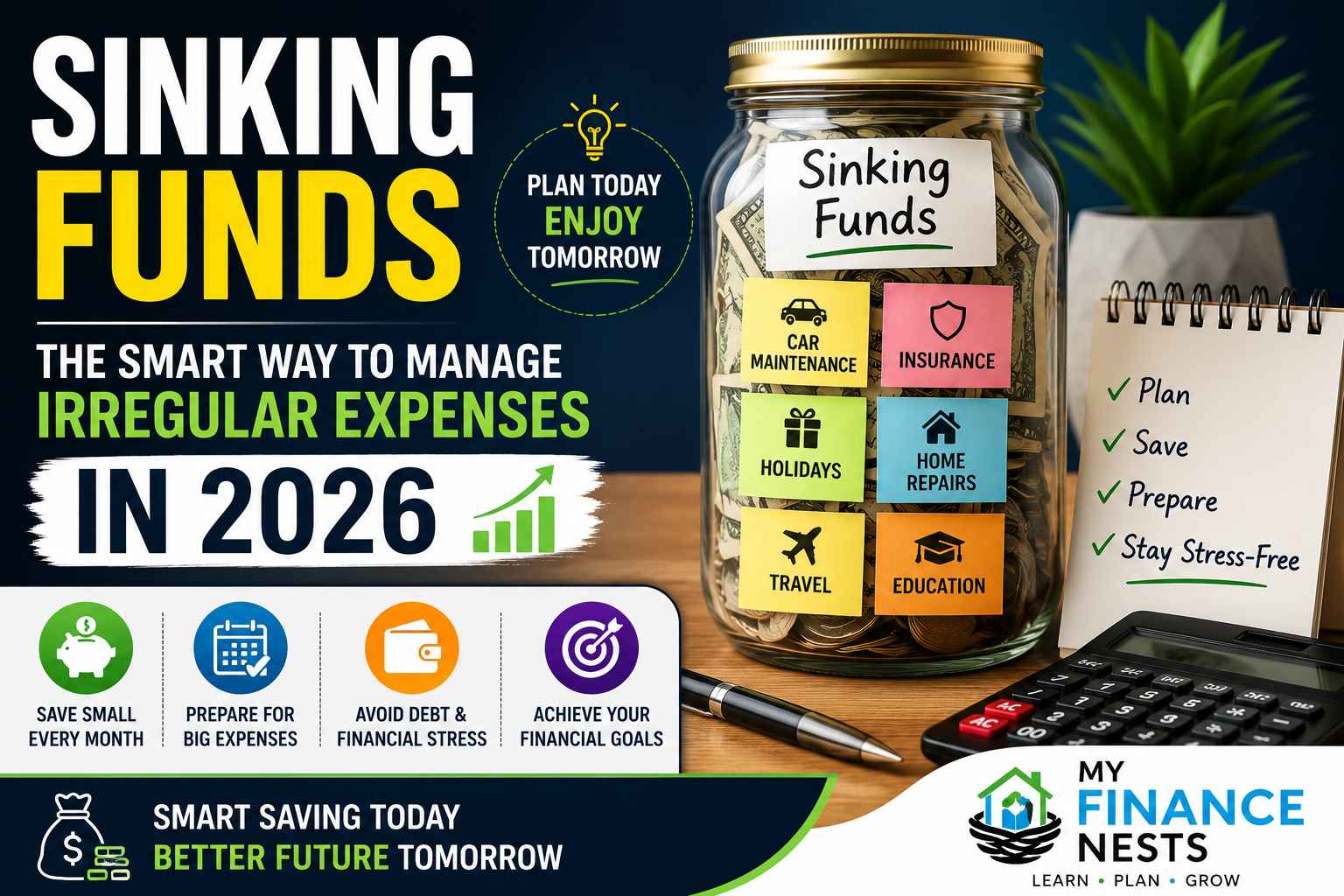
Zero-Based Budgeting With Sinking Funds
Zero-based budgeting can work particularly well with sinking funds.
Suppose you know that your car insurance will cost $1,200 next year.
Instead of waiting until the bill arrives, you could allocate approximately $100 per month toward that future expense.
The $100 becomes part of your monthly budget.
This means the expense is planned before it arrives.
You can create similar categories for:
- Holidays
- Travel
- Car repairs
- Home maintenance
- Annual subscriptions
- Education
- Technology purchases
This creates a more complete financial planning system.
Is Zero-Based Budgeting Right for Everyone?
Not necessarily.
Some people prefer a simpler budgeting method.
For example, someone may prefer broad categories rather than assigning every dollar individually.
The best budgeting system is the one you can realistically maintain.
Zero-based budgeting may be particularly useful for people who:
- Feel like their money disappears quickly
- Want stronger spending control
- Have specific financial goals
- Are trying to reduce debt
- Want to increase savings
- Need a clearer monthly financial plan
It may feel less attractive to someone who has very simple finances and already tracks spending effectively.
A Simple Monthly Zero-Based Budget Template
You can create a basic template like this:
Monthly Income: $________
Essential Expenses
Housing: $________
Food: $________
Transportation: $________
Utilities: $________
Insurance: $________
Financial Goals
Savings: $________
Investments: $________
Debt Payments: $________
Lifestyle
Entertainment: $________
Dining: $________
Shopping: $________
Hobbies: $________
Future Expenses
Travel Fund: $________
Car Fund: $________
Holiday Fund: $________
Home Fund: $________
Miscellaneous
Other: $________
Total Allocated: $________
Unassigned Amount: $0
The objective is to give your expected income a clear purpose.
How Often Should You Review Your Budget?
A monthly review is a practical starting point.
At the end of each month, compare your plan with your actual spending.
Ask:
- Did I stay within my grocery budget?
- Did transportation cost more than expected?
- Did I save the amount I planned?
- Did I overspend in entertainment?
- Were any expenses forgotten?
- Should I change next month’s allocations?
Do not treat a budget mistake as a failure.
Instead, treat it as information.
If your grocery budget is consistently too low, adjust it.
If you repeatedly spend less in another category, redirect the difference.
The goal is to create a budget that reflects your real financial life.
Final Thoughts
Zero-based budgeting is a simple but powerful idea:
Give every dollar a purpose before you spend it.
Instead of allowing your income to disappear through dozens of small purchases, you create a clear plan for your money.
The method can help you manage everyday expenses, save for future goals, reduce unnecessary spending, organize debt payments, and become more intentional with your financial decisions.
However, zero-based budgeting does not require perfection.
Your income may change. Expenses may increase. Unexpected costs may appear. Your priorities may evolve.
That is completely normal.
The goal is not to predict every financial event perfectly. The goal is to create a system that helps you respond intelligently when circumstances change.
Start with your actual income and expenses.
Separate needs from wants.
Give savings and financial goals a place in your budget.
Plan for irregular expenses.
Leave some flexibility where necessary.
Then review your results at the end of every month.
Over time, this process can make money management feel less confusing and more organized.
Most importantly, remember that a budget is not about restricting your life. It is about making sure your money supports the life and goals you care about.
When every dollar has a purpose, your financial decisions become more intentional—and your future can
Table of Contents