Introduction
When Emergency Fund vs Investing people start thinking about building wealth, investing is usually one of the first things that comes to mind. Stocks, ETFs, mutual funds, retirement accounts, and other investments can help money grow over the long term.
But there is another financial goal that is just as important and often gets ignored: building an Emergency Fund vs Investing.
Emergency Fund vs Investing Imagine that you start investing every month and your portfolio is growing nicely. Then, unexpectedly, your car needs an expensive repair, your income temporarily decreases, or you suddenly face a major household expense.
If you do not have cash available, you may be forced to sell your investments at exactly the wrong time.
This creates an important personal-finance question:
Should you build an Emergency Fund vs Investing first, or should you start investing immediately?
The answer is not always the same for everyone.
Emergency Fund vs Investing Your income, expenses, debt, financial stability, investment goals, and personal circumstances all matter.
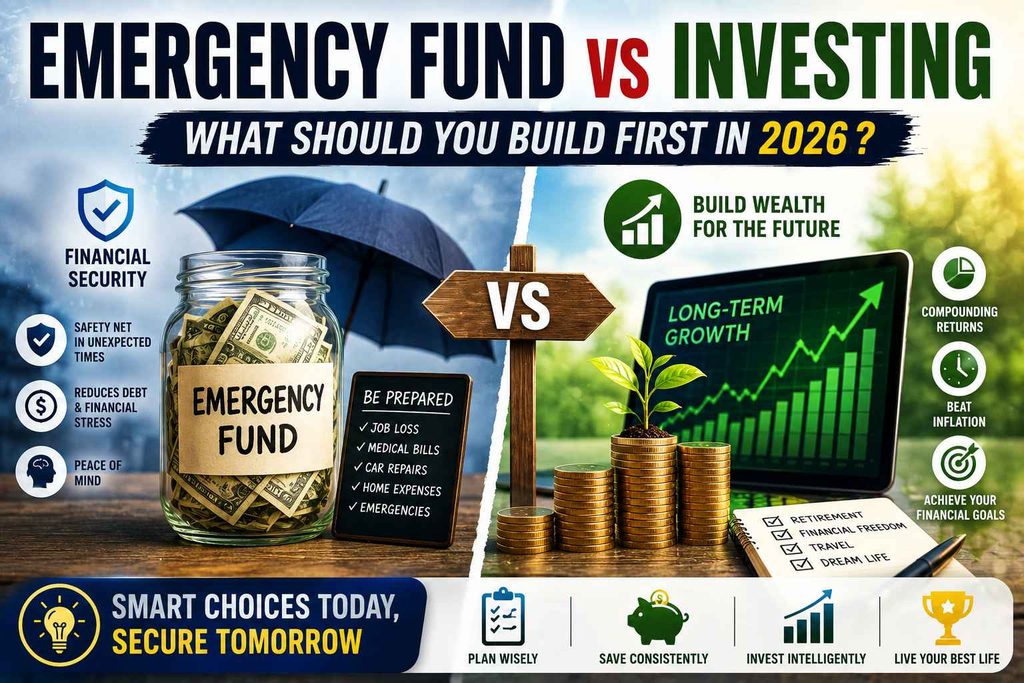
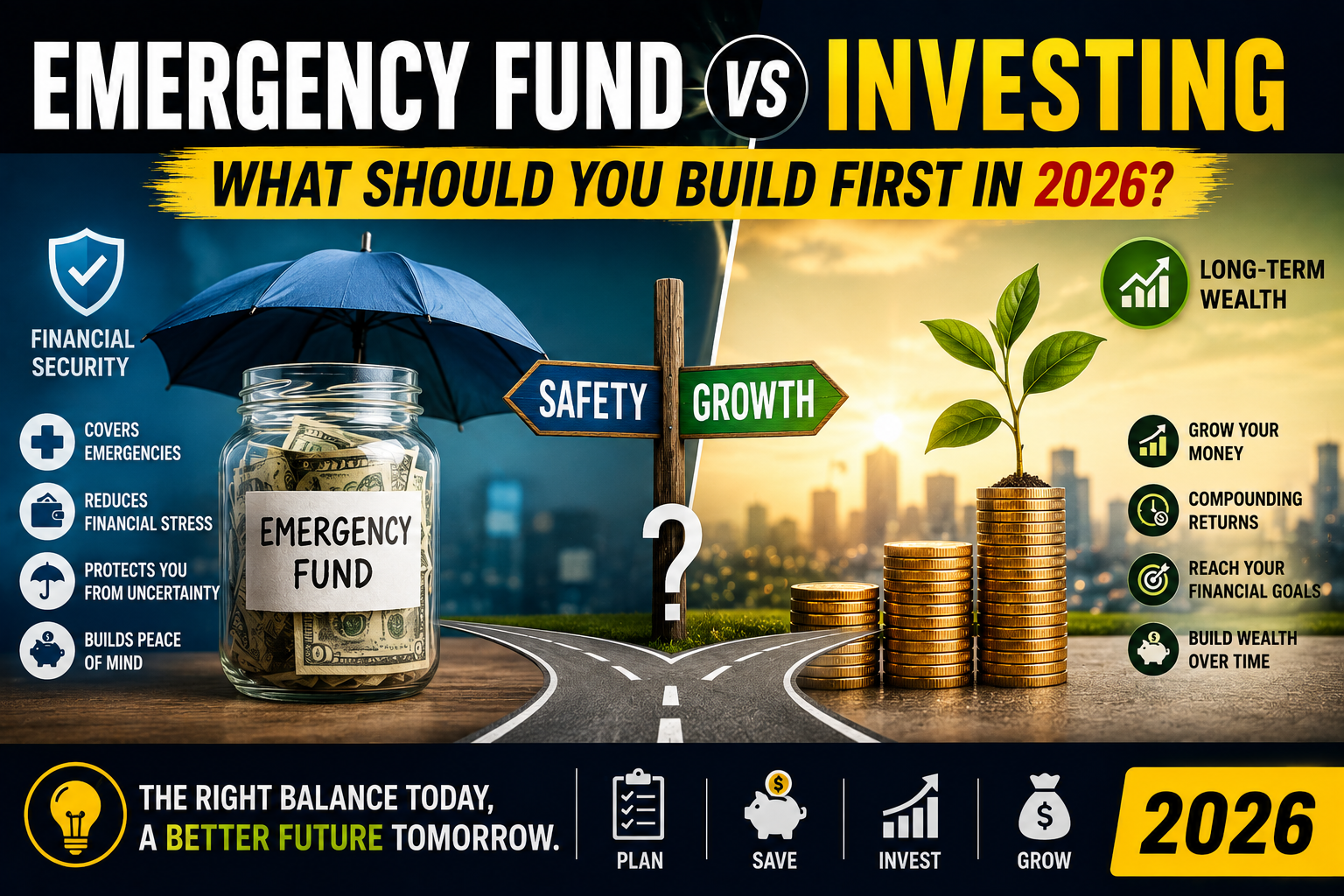
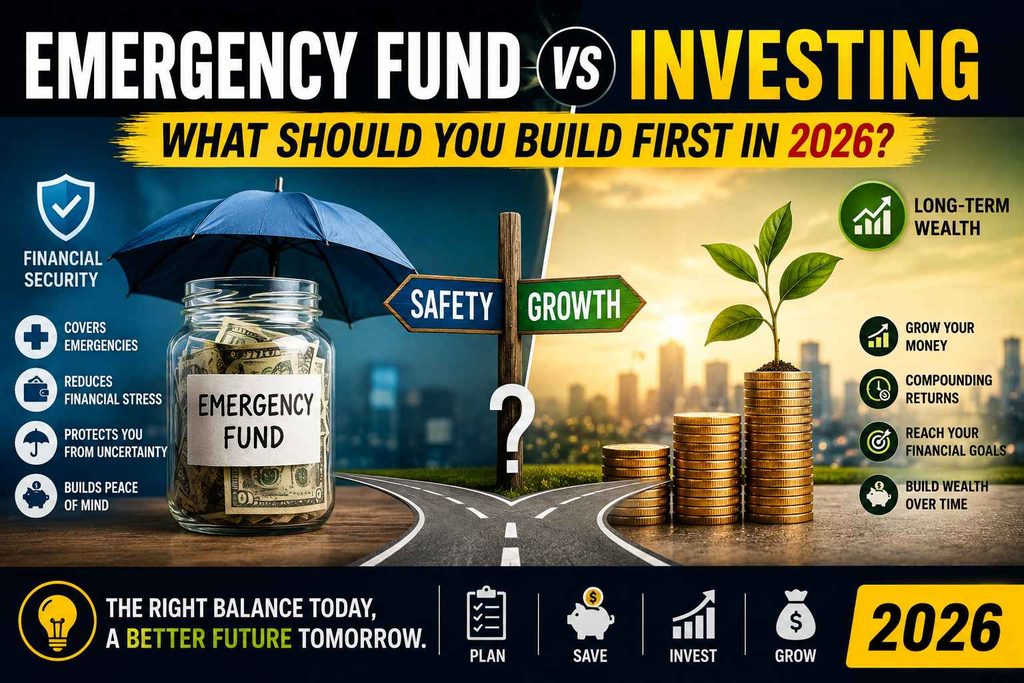
An emergency fund is designed to provide financial protection when unexpected expenses appear. Investing, on the other hand, is primarily designed for long-term wealth building.
Emergency Fund vs Investing These two goals are not enemies.
In fact, they can work together.
Emergency Fund vs Investing The challenge is deciding how much money should go toward financial security and how much should go toward long-term growth.
In this guide, MyFinanceNests explains the difference between emergency savings and investing, why an emergency fund matters, when investing may make sense, the pros and cons of each approach, practical examples, common mistakes, FAQs, and a simple strategy for balancing both goals.
What Is an Emergency Fund?
Emergency Fund vs Investing is money that you keep specifically for unexpected financial situations.
It is not normally intended for vacations, shopping, entertainment, or planned purchases.
Emergency Fund vs Investing Instead, it acts as a financial safety net.
Unexpected expenses can include:
- Emergency medical bills
- Major car repairs
- Urgent home repairs
- Temporary loss of income
- Unexpected family expenses
- Essential travel
- Emergency replacement of important equipment
The purpose is simple:
When something goes wrong financially, you have money available without immediately relying on debt or selling investments.
Emergency Fund vs Investing is generally kept somewhere relatively accessible rather than being invested in assets that can fluctuate significantly in value.
What Is Investing?
Emergency Fund vs Investing means putting money into assets with the expectation that they may increase in value or generate income over time.
Common investment categories include:
- Stocks
- ETFs
- Bonds
- Mutual funds
- Real estate
- Retirement investments
- Other financial assets
Unlike an emergency fund, investments can rise and fall in value.
That means Emergency Fund vs Investing is generally more suitable for money that you do not need immediately.
For example, if you Emergency Fund vs Investing money for a long-term goal and the market temporarily falls, you may have the ability to wait for potential recovery.
But if your rent or essential expenses are due next week, market fluctuations can become a serious problem.
Emergency Fund vs Investing: The Main Difference
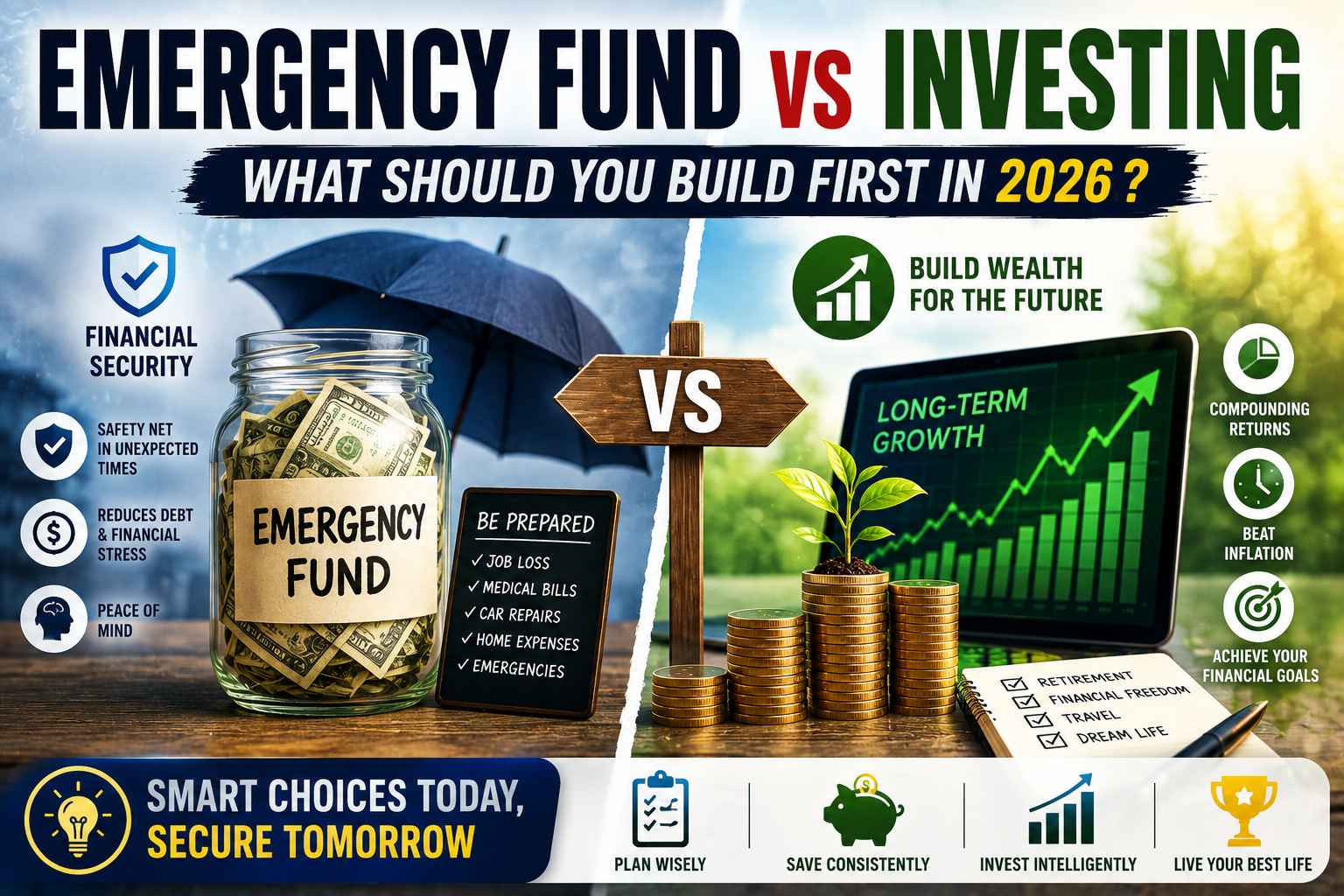
Emergency Fund vs Investing The biggest difference is their purpose.
Emergency Fund
Purpose: Financial protection
Investing
Purpose: Long-term wealth growth
Think of an emergency fund as your financial shock absorber.
Emergency Fund vs Investing Think of investing as your financial growth engine.
You need the shock absorber because unexpected problems happen.
Emergency Fund vs Investing You need the growth engine because simply keeping all your money in cash may not be enough for long-term wealth building.
A strong financial plan can therefore contain both.
Why an Emergency Fund Should Usually Come First
Emergency Fund vs Investing For many people, building at least a basic emergency reserve before aggressively investing can be a sensible approach.
Why?
Because investments are not guaranteed to be worth the same amount tomorrow.
Imagine you invest $5,000.
Emergency Fund vs Investing Six months later, you suddenly need $3,000 for an emergency.
Emergency Fund vs Investing If the market happens to be down at that moment, you may have to sell investments for less than you originally paid.
The problem is not necessarily that investing was bad.
The problem is that the money was being used for two different purposes.
Emergency Fund vs Investing money needs availability and stability.
Investment money needs time and patience.
Emergency Fund vs Investing Keeping these roles separate can make financial planning easier.
How Much Should an Emergency Fund Have?
Emergency Fund vs Investing There is no single amount that works for everyone.
A common approach is to build an emergency fund based on your essential monthly expenses.
For example, suppose your essential monthly expenses are:
- Housing: $1,000
- Food: $400
- Utilities: $200
- Transportation: $200
- Insurance: $100
Your essential monthly expenses would be $1,900.
If you wanted three months of essential expenses, your target would be:
$1,900 × 3 = $5,700
A six-month target would be:
$1,900 × 6 = $11,400
The right amount depends on factors such as:
- Income stability
- Number of income earners
- Family responsibilities
- Job security
- Debt obligations
- Health and insurance coverage
- Monthly expenses
- Access to other resources
SEmergency Fund vs Investing omeone with highly stable employment may feel comfortable with a different reserve than someone whose income changes significantly from month to month.
Should Everyone Have Six Months of Expenses?
Emergency Fund vs Investing Not necessarily.
The popular “three to six months” guideline is a starting point rather than a universal rule.
Emergency Fund vs Investing Someone with a stable salary, low debt, strong insurance coverage, and a second household income may require less cash than someone with unpredictable income and significant responsibilities.
Emergency Fund vs Investing The important thing is to think about how long you could realistically manage if your normal income suddenly stopped.
Ask yourself:
“If I could not earn my normal income tomorrow, how long could my current savings support essential expenses?”
That question may provide a more useful starting point than blindly following a fixed number.
When Should You Start Investing?
Emergency Fund vs Investing Once you have at least a basic financial safety net, investing can become an important part of your long-term plan.
You may want to consider investing when:
- Your essential expenses are reasonably covered
- You have a basic emergency reserve
- You understand your investment risk
- You have a long-term goal
- You are not relying on investment money for immediate bills
- You can tolerate temporary market declines
Investing works best when you can give your money time.
The longer your investment horizon, the more opportunity you may have to experience the effects of compounding and long-term growth.
What If You Have High-Interest Debt?
This is an important consideration.
Suppose you have a credit card balance carrying a very high interest rate.
Emergency Fund vs Investing At the same time, you are thinking about investing additional money.
Before aggressively investing, consider whether paying down expensive debt could be the more appropriate financial priority.
Why?
Because high-interest debt can grow quickly.
Emergency Fund vs Investing If your debt costs you a high interest rate, eliminating that expense can provide a predictable financial benefit that market returns cannot guarantee.
Emergency Fund vs Investing A practical order for many people may look like:
Basic emergency savings → high-cost debt management → larger emergency fund → long-term investing
However, individual circumstances vary.
The Pros of Building an Emergency Fund
1. Provides Financial Security
Emergency Fund vs Investing can reduce the stress caused by unexpected expenses.
Instead of immediately asking:
“How will I pay for this?”
you may already have money available.
2. Reduces Dependence on Debt
Without savings, people may use credit cards or expensive loans during emergencies.
A cash reserve can reduce the need for borrowing.
3. Protects Your Investments
This is one of the most important benefits.
If your emergency savings covers unexpected expenses, you may not have to sell investments during a market downturn.
4. Provides Flexibility
Savings can give you more options when circumstances change.
For example, if you temporarily lose income, having reserves can give you time to adjust.
5. Improves Financial Confidence
Knowing that you have money available for emergencies can make it easier to focus on long-term financial goals.
The Cons of Keeping Too Much Money in an Emergency Fund
An emergency fund is useful, but keeping an excessive amount of money in cash also has potential disadvantages.
1. Lower Growth Potential
Cash generally has less long-term growth potential than investments such as diversified stocks.
2. Inflation Risk
Over long periods, inflation can reduce the purchasing power of money.
3. Opportunity Cost
Money sitting in a very low-return account is money that could potentially have been used for other financial goals.
4. Psychological Comfort Can Become Excessive
Some people become so focused on financial safety that they never invest.
That can make long-term wealth building more difficult.
The goal is not to keep every dollar in cash.
The goal is to keep enough cash for realistic emergencies while allowing longer-term money to work toward growth.
The Pros of Investing
1. Long-Term Growth Potential
Investing gives your money the opportunity to grow over long periods.
2. Compounding
When investment returns are reinvested, future growth can potentially build on previous growth.
This is one reason starting early can be valuable.
3. Helps Fight Inflation Over Time
Long-term investments may provide growth that helps offset the declining purchasing power of money caused by inflation, although returns are never guaranteed.
4. Supports Long-Term Goals
Investing can be useful for goals such as:
- Retirement
- Education
- Home ownership
- Long-term wealth
- Financial independence
5. Builds Financial Assets
Instead of relying entirely on income from work, investing can help you build assets that may generate growth or income.
The Cons of Investing
1. Market Risk
Investment values can decline.
There is no guarantee that an investment will increase in value.
2. Short-Term Volatility
Even good investments can experience significant short-term fluctuations.
3. Emotional Decisions
Market declines can cause inexperienced investors to panic and sell.
4. Liquidity Problems
Some investments may not be suitable for money that you need immediately.
5. Losses Are Possible
Investing involves risk.
You can lose part or, in some circumstances, all of the money invested depending on the asset and situation.
What If You Have Only a Small Amount of Money?
You do not need thousands of dollars to begin improving your financial situation.
Suppose you can save $100 per month.
You might divide it between two goals.
For example:
$70 → emergency savings
$30 → long-term investing
Once your emergency fund reaches a comfortable level, you could change the allocation.
For example:
$20 → emergency fund
$80 → investing
These numbers are only examples.
Your actual allocation should depend on your financial situation.
The important idea is that saving and investing do not necessarily have to be either-or decisions.
A Three-Stage Strategy
A simple way to think about the process is to divide it into three stages.
Stage 1: Financial Protection
Build a small emergency reserve.
Your first goal could be to create enough savings to handle a common unexpected expense.
Stage 2: Financial Stability
Increase the emergency fund toward a more substantial target while addressing expensive debt.
Stage 3: Financial Growth
Once your financial foundation is stronger, direct more available money toward long-term investments.
This approach creates a foundation before increasing investment risk.
Example: A Young Worker
Imagine Sarah earns $3,000 per month.
Her essential expenses are $2,000.
She currently has $500 in savings and no investments.
She wants to start investing $300 every month.
Should she immediately invest the entire $300?
A reasonable alternative could be to first build a basic emergency reserve.
For example:
$250 → emergency savings
$50 → investing
After her emergency savings becomes stronger, she could redirect more money toward investing.
This approach allows her to begin learning about investing without completely ignoring financial security.
Example: Someone With a Large Emergency Fund
Now imagine Daniel has $20,000 in easily accessible savings.
His essential expenses are $2,500 per month.
He already has a substantial reserve.
If he continues putting almost all new savings into cash despite having long-term goals, he may be missing opportunities for investment growth.
For someone in this situation, investing a larger portion of new long-term savings may make more sense.
Again, the decision depends on his goals, risk tolerance, and circumstances.
Where Should Emergency Savings Be Kept?
Emergency savings generally needs to be:
- Accessible
- Relatively stable
- Separate from everyday spending
- Easy to understand
- Available when needed
The objective is not to maximize investment returns.
The objective is reliability.
An emergency fund that suddenly loses significant value when you need it defeats part of its purpose.
Common Mistakes People Make
Mistake 1: Investing Emergency Money
Money needed for immediate emergencies generally should not be exposed to unnecessary market volatility.
Mistake 2: Keeping Everything in Cash Forever
The opposite mistake is never investing because you are afraid of market risk.
Long-term goals may require a different strategy.
Mistake 3: Ignoring High-Interest Debt
Building a large investment portfolio while expensive debt continues growing can create an inefficient financial situation.
Mistake 4: Copying Someone Else’s Strategy
Your friend’s emergency fund target may not be appropriate for you.
Mistake 5: Checking Investments Every Day
Long-term investing usually requires patience.
Daily price movements can encourage emotional decisions.
Mistake 6: Treating Investments Like a Savings Account
Investments can lose value.
They should not automatically be considered emergency cash.
How to Balance Saving and Investing
A useful framework is to ask five questions:
1. Do I have emergency savings?
If not, building a basic reserve may deserve priority.
2. Do I have expensive debt?
If yes, evaluate whether paying it down should come before aggressive investing.
3. How stable is my income?
Less predictable income may justify a larger emergency reserve.
4. What is my investment time horizon?
Longer-term goals may allow more time to handle market volatility.
5. How much risk can I realistically tolerate?
An investment strategy should match your ability and willingness to handle losses.
Emergency Fund vs Investing: Quick Comparison
| Feature | Emergency Fund | Investing |
|---|---|---|
| Main purpose | Financial protection | Long-term growth |
| Time horizon | Short/medium term | Usually long term |
| Risk | Generally low | Varies |
| Accessibility | High | Depends on investment |
| Value fluctuations | Usually limited | Can be significant |
| Best for | Unexpected expenses | Long-term goals |
| Main priority | Stability | Growth |
| Guaranteed returns | Not necessarily | No |
Frequently Asked Questions
Should I build an emergency fund before investing?
For many people, building at least a basic emergency reserve before investing aggressively can be a sensible approach. However, you can potentially start learning about and making small long-term investments while building savings.
How much should I keep in an emergency fund?
A common guideline is several months of essential expenses, but the appropriate amount depends on your income stability, expenses, debt, family responsibilities, and personal circumstances.
Is an emergency fund better than investing?
Neither is universally better. They serve different purposes. Emergency savings provide financial protection, while investing is designed primarily for long-term growth.
Can I invest my emergency fund?
Generally, emergency money should prioritize accessibility and stability rather than maximum growth. Putting emergency funds into volatile investments can create problems if you need the money during a market decline.
What if I cannot afford to save and invest at the same time?
Start with what you can realistically afford. Even a small amount saved consistently can help build a financial cushion. Once your emergency fund reaches an appropriate level, you can redirect more money toward long-term investing.
Should I pay debt or invest first?
It depends on the type and cost of the debt. High-interest debt can deserve priority because its cost may be substantial. Lower-cost debt may require a different approach.
Can I have too much emergency savings?
Yes. Keeping significantly more cash than you reasonably need for emergencies can reduce the amount available for other long-term goals. The right balance depends on your circumstances.
What happens if my investments lose money?
Investment values can decline. This is why money needed for emergencies should generally be separated from long-term investment money.
Is investing risky?
Yes. All investments carry some level of risk, although the type and degree vary significantly between assets.
What is the biggest mistake beginners make?
One common mistake is investing money they may need soon. Another is putting all their money into cash and never developing a long-term investment strategy.
Final Thoughts
The debate between emergency funds and investing is sometimes presented as if you have to choose one and completely ignore the other.
That is not necessarily the best way to think about personal finance.
An emergency fund and an investment portfolio have different jobs.
Your emergency fund is there to protect you when life does something unexpected.
Your investments are there to help your long-term money potentially grow.
One provides stability.
The other provides growth potential.
A strong financial plan needs to recognize the importance of both.
If you have no savings and are investing every available dollar, you may be exposing yourself to unnecessary financial stress.
On the other hand, if you have a large emergency reserve and never invest for long-term goals, inflation and missed growth opportunities can become concerns.
The goal is balance.
Start by understanding your essential expenses.
Build a reasonable emergency cushion.
Address expensive debt.
Then use money that you will not need in the near future for long-term investing.
As your income, expenses, family situation, and financial goals change, your strategy can change too.
There is no magic number that works for every person.
Someone with highly predictable income may need a different emergency reserve from someone with variable income.
Someone supporting a family may need more financial protection than someone with very few monthly obligations.
Someone approaching a major purchase may also have a different strategy from someone investing for retirement decades away.
The most important thing is to give every dollar a purpose.
Emergency money should protect you.
Long-term investment money should work toward your future.
And money needed for immediate bills should not depend on whether the stock market happens to be having a good month.
The best financial strategy is not necessarily the one that produces the highest possible return.
It is the one that helps you remain financially stable while steadily working toward your long-term goals.
Before investing, understand your own financial situation, risk tolerance, time horizon, and objectives. And before making major financial decisions, consider getting advice from a qualified financial professional.
Final Takeaway
Build a financial safety net first, then let your long-term money work for your future. Saving protects your present; investing can help build your future.
Table of Contents